
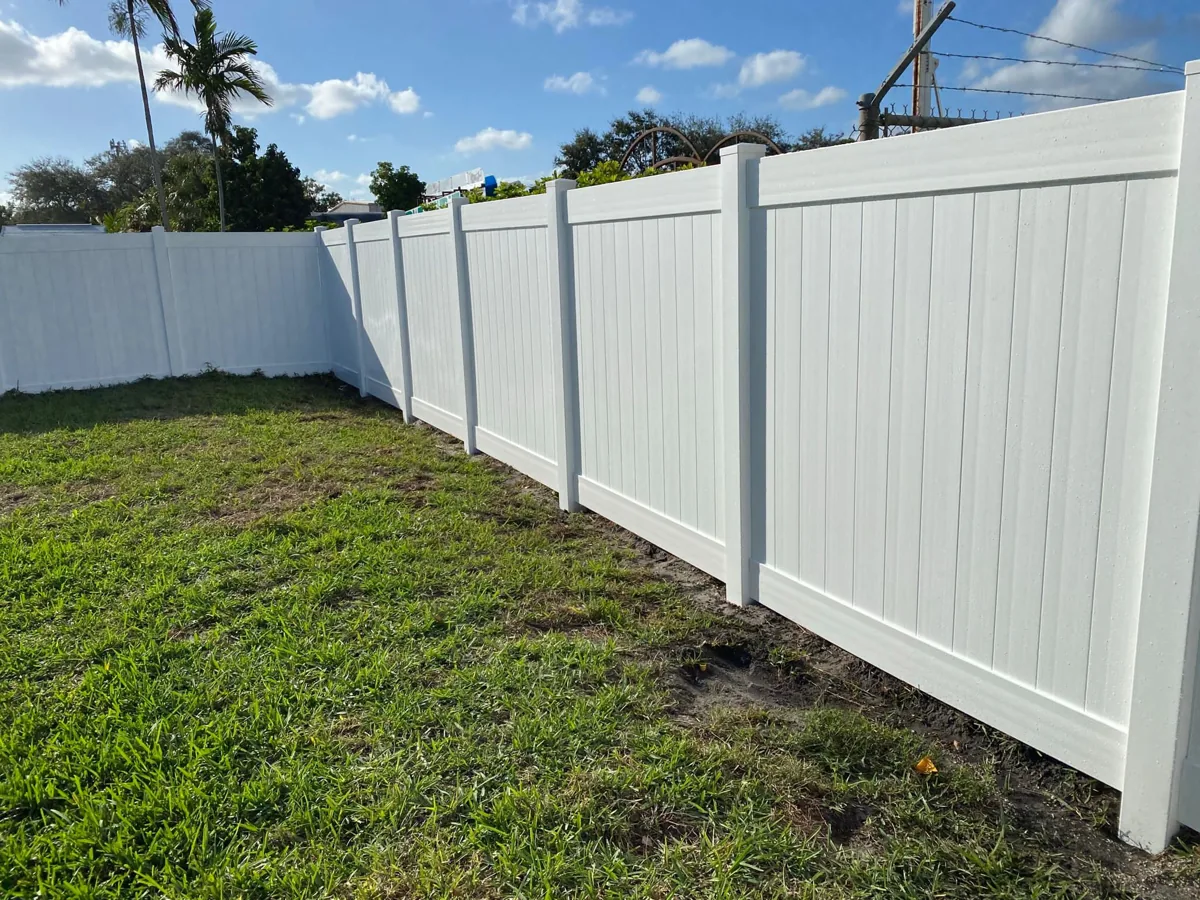
Choose for your everyday life outside
Choosing a fence material is easier when you start with the experience you want in your yard. Do you want to sit on the patio without looking directly into an adjoining space? Do you want to preserve a view of planting or water? Is your main concern a usable boundary with a convenient gate? Those questions point toward different designs, even before you begin comparing colors and finishes.
Aluminum, PVC / vinyl, and wood can all be part of a thoughtful fence project. They do not provide identical results, and none is the best choice for every property. The useful comparison includes visibility, texture, upkeep, layout, and the requirements that apply to the site. This guide is a starting point for that conversation. The final choice should be based on the actual product and installation proposed for your property.
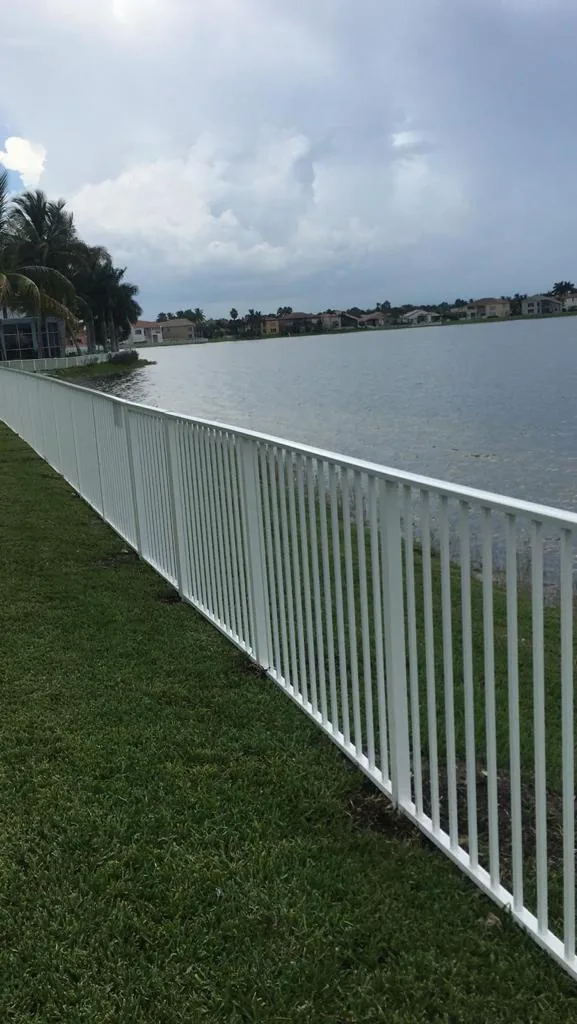
Aluminum keeps sightlines open
Open aluminum fencing can define a space without creating a solid visual wall. It is worth considering when the landscape beyond the fence is part of what you enjoy about the yard. Slender pickets and a simple top rail can complement both contemporary and traditional homes. Dark finishes often appear less prominent against planting, although the best color depends on the setting and your preference.
The openness is also the main tradeoff. An open-picket fence does not provide the screening of solid panels. If privacy is the reason for the project, start by acknowledging that difference. For pets or a pool area, look beyond the material name: spacing, ground clearance, height, gates, and latches require a specific review. A visually attractive enclosure is not automatically suitable for every use or compliant with pool-barrier requirements.
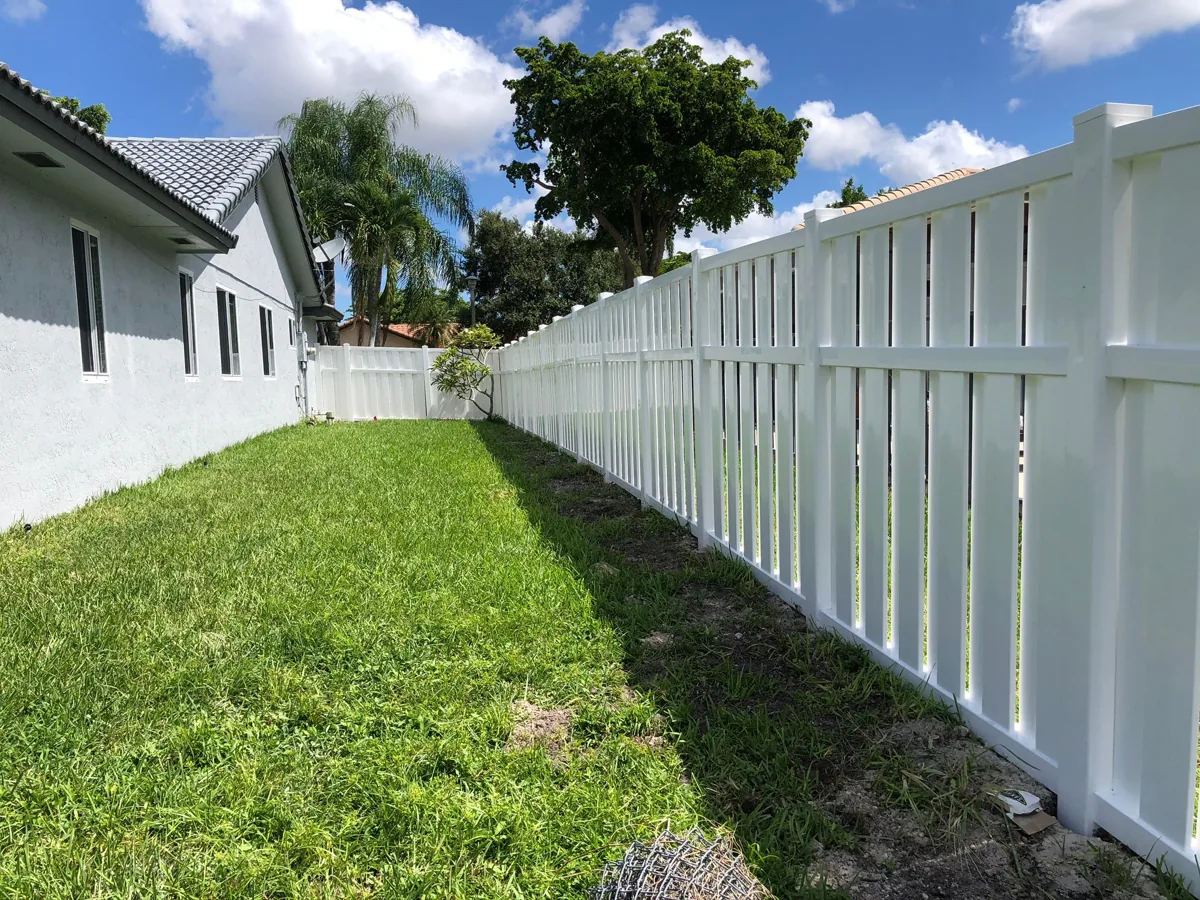
Vinyl offers a consistent privacy backdrop
PVC / vinyl is often considered for solid privacy fencing. Its regular panel rhythm and consistent surface can give a yard a neat, quiet backdrop. White is familiar, but available styles may include other colors or decorative details. Ask to see the options for the actual product under consideration. A project photograph shows one design; it should not be treated as a complete catalog or proof of current availability.
Vinyl usually appeals to owners who prefer not to plan for routine staining or repainting. Cleaning and inspections still matter, and an impact-damaged component may need product-specific replacement parts. Discuss the whole system, including posts and reinforcement, rather than comparing only panel appearance. If approval documentation is needed, the proposed installation details should be considered alongside the product, not added as an afterthought once a style has been chosen.
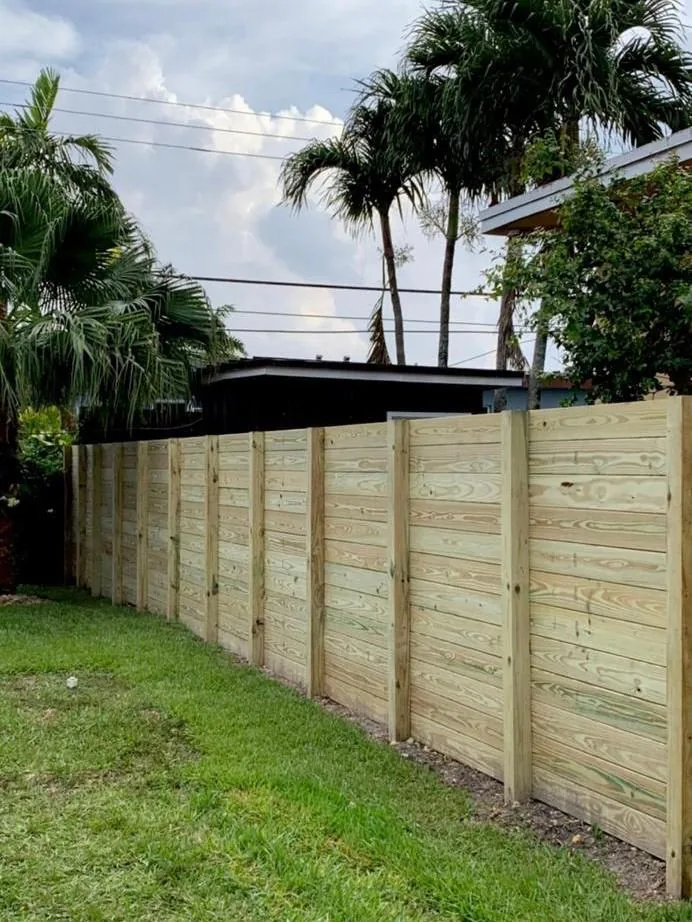
Wood brings grain, texture, and variation
Wood has a visual warmth that can sit comfortably beside a planted garden or paved terrace. Vertical and horizontal arrangements create different rhythms, and the visible framing can be part of the design. Natural variation in tone and grain is normal, so the result will not have the identical surface of a manufactured panel. If you like material character and expect some change with time, that can be part of wood’s appeal.
The same natural qualities mean that weathering and maintenance deserve an honest discussion. Wood reacts to moisture and can change color, check, or move. The proposed lumber, exposure, and finishing plan matter. Ask whether staining or sealing is included, when it would be appropriate, and which product instructions should guide the work. Do not assume a newly installed wood fence will keep its initial appearance without care.
Think about both sides of the boundary
Spend time looking at the proposed fence line from more than one position. Stand where you sit outside, look through the windows you use most, and consider the view from adjoining spaces. A material that looks appealing close up may feel very different across the full length of a yard. Solid panels create a stronger enclosure; open pickets let more of the surrounding scene remain visible.
Consider the relationship with the house and landscape as well. A bright panel can echo exterior trim, while wood can coordinate with other natural surfaces. A dark open fence may make the boundary less visually dominant. These are design observations, not universal rules. Use real project photos to identify the feeling you prefer, then discuss what can be achieved with available products and the conditions of your property.
Do not let the gate become an afterthought
Whichever material you choose, the gate is the part you will operate. Plan its width around actual use. Equipment access, waste collection, gardening, and movement between outdoor areas can all influence the best location. Mark nearby walls, landscaping, and grade changes so the opening direction makes sense. A good-looking fence can still be frustrating if the gate is inconvenient every time you use it.
Different gate designs require appropriate support and hardware. A solid privacy gate is not the same as an open-picket opening, and wider gates can involve additional considerations. Ask how the gate will be built and what care it will need. If access control or another specialized function is part of your idea, explain it at the beginning so the scope can be reviewed rather than assuming it is included in a standard fence installation.
Compare the care you are willing to give
A useful maintenance comparison is practical rather than absolute. Would you prefer occasional cleaning of a manufactured surface, or are you comfortable with the changing appearance and potential finishing needs of wood? Can you keep irrigation from repeatedly spraying the fence? Will plants grow directly against it? The conditions around the fence can matter as much as the material label when you think about routine care.
Every system benefits from checking gate operation and looking for damage. Follow the selected manufacturer’s cleaning guidance, keep records of the product, and ask before using harsh chemicals or making changes to hardware. Written warranty terms may include care conditions and exclusions. Read those terms as part of the decision. Avoid assuming that “low maintenance” means no attention at all or that a warranty covers every cause of damage.
Use your property to make the final decision
Bring a simple layout, photos, and your main priorities to an estimate. If you have a survey or association design requirements, include those too. Confirm which authority governs the property before relying on a general rule about height or placement. Product choice, fence location, and approval requirements can influence one another, so it helps to consider them together instead of treating them as unrelated steps.
Azure Fence offers aluminum, PVC / vinyl, and wood fencing. Explore the individual service pages for more detail, or request a free estimate to discuss your property. You can start with a material preference or simply describe what you want the fence to do. The aim is a clear scope with an appearance and care plan that make sense for your outdoor space.
Explore aluminum, PVC / vinyl, and wood fencing, or see our project gallery for real examples. Planning in Boca Raton? Our local guide can help you prepare.
Get a Free Estimate